

Jigsaw for July 4: https://puzzles.curioustorian.com/four-score-and-seven
This week, America turns 250, and naturally we look back to the founding. So it is worth remembering perhaps the most famous example of a nation looking back at itself. It did not happen on the Fourth of July, and it was not written in 1776.
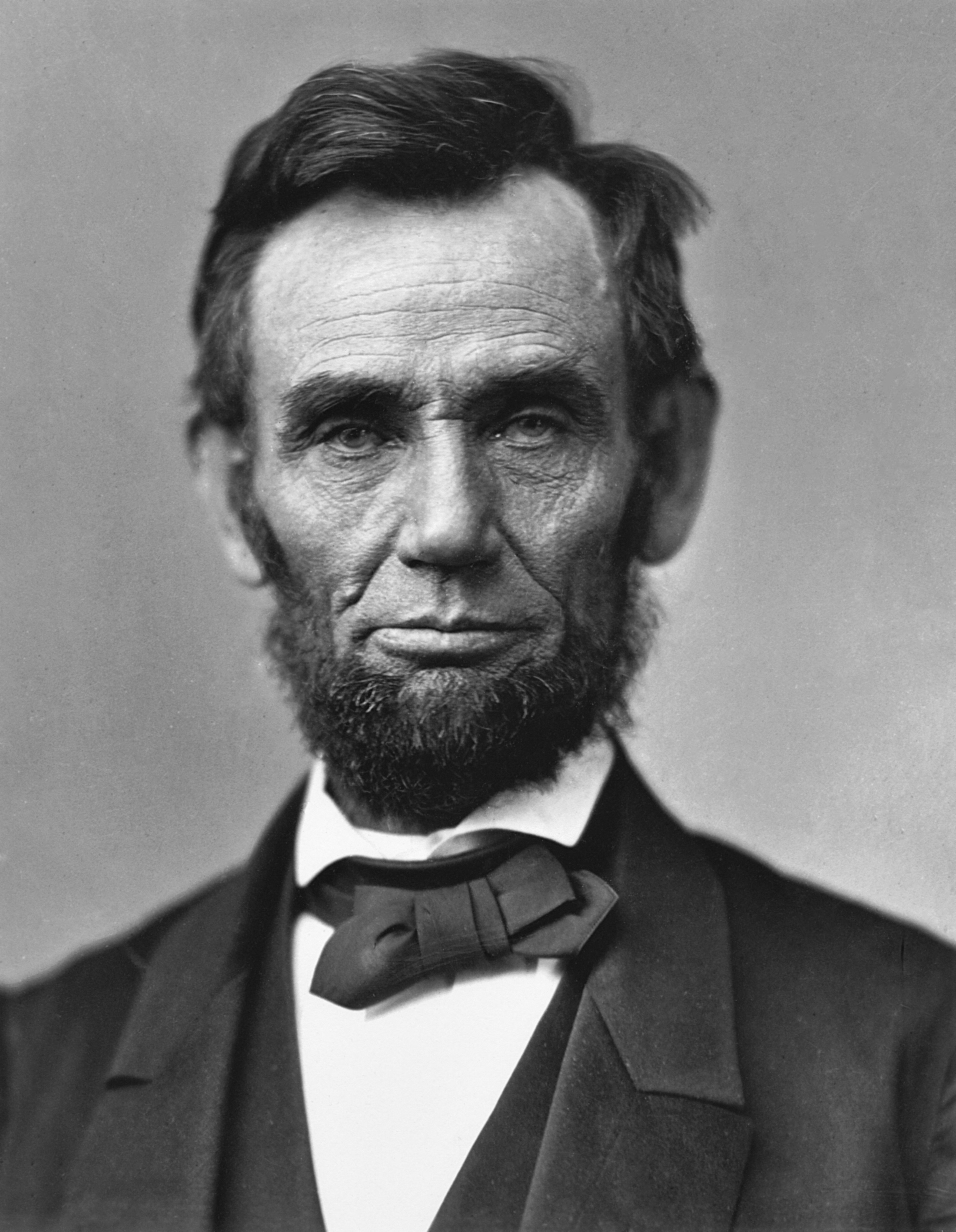
Abraham Lincoln delivered it on a cold afternoon, November 19, 1863, on a Pennsylvania battlefield where a few months earlier thousands had died. He spoke for barely two minutes. He was fifty-four and looks older, the war written all over his face.
Here is the thing most people miss. The Gettysburg Address is itself a looking-back. Lincoln opens by reaching all the way to 1776. “Four score and seven years ago” is eighty-seven years, and 1863 minus 87 lands exactly on the Declaration of Independence. He was not counting from the Constitution. He was counting from the promise.
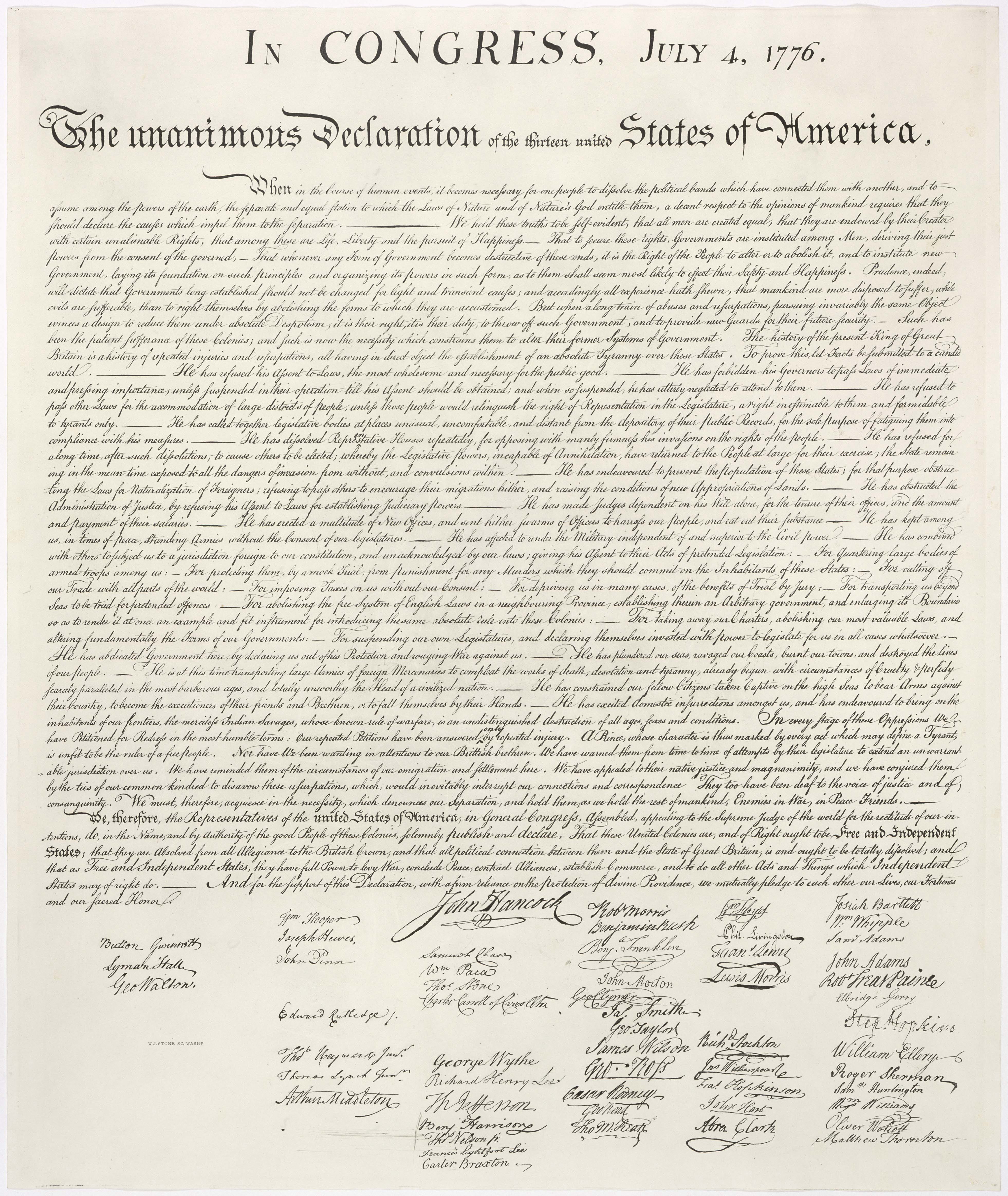
And then he does something quietly visionary. He does not treat that founding as finished. He calls the country a nation “dedicated to a proposition,” and a proposition is something you set out to prove, not a thing you already own. The proposition was that all men are created equal, words set down in 1776 by some men who owned other men. Lincoln knew the distance between the sentence and the country. He did not pretend it away. He called the work “unfinished,” and he handed it to the living.
That is the optimism buried in a speech given over fresh graves. A nation is not a finished thing to be guarded. It is a goal to be reached for, generation after generation, no matter the cost. The founders wrote the proposition. Everyone since has been asked to further it.
Here is the whole of it, 272 words, worth every one.
The Gettysburg Address
Abraham Lincoln, November 19, 1863
Four score and seven years ago our fathers brought forth on this continent, a new nation, conceived in Liberty, and dedicated to the proposition that all men are created equal.
Now we are engaged in a great civil war, testing whether that nation, or any nation so conceived and so dedicated, can long endure. We are met on a great battle-field of that war. We have come to dedicate a portion of that field, as a final resting place for those who here gave their lives that that nation might live. It is altogether fitting and proper that we should do this.
But, in a larger sense, we can not dedicate, we can not consecrate, we can not hallow this ground. The brave men, living and dead, who struggled here, have consecrated it, far above our poor power to add or detract. The world will little note, nor long remember what we say here, but it can never forget what they did here. It is for us the living, rather, to be dedicated here to the unfinished work which they who fought here have thus far so nobly advanced. It is rather for us to be here dedicated to the great task remaining before us, that from these honored dead we take increased devotion to that cause for which they gave the last full measure of devotion, that we here highly resolve that these dead shall not have died in vain, that this nation, under God, shall have a new birth of freedom, and that government of the people, by the people, for the people, shall not perish from the earth.
And no, he did not scribble it on the back of an envelope on the train, whatever you were told in school. Here is the proof, in his own hand.
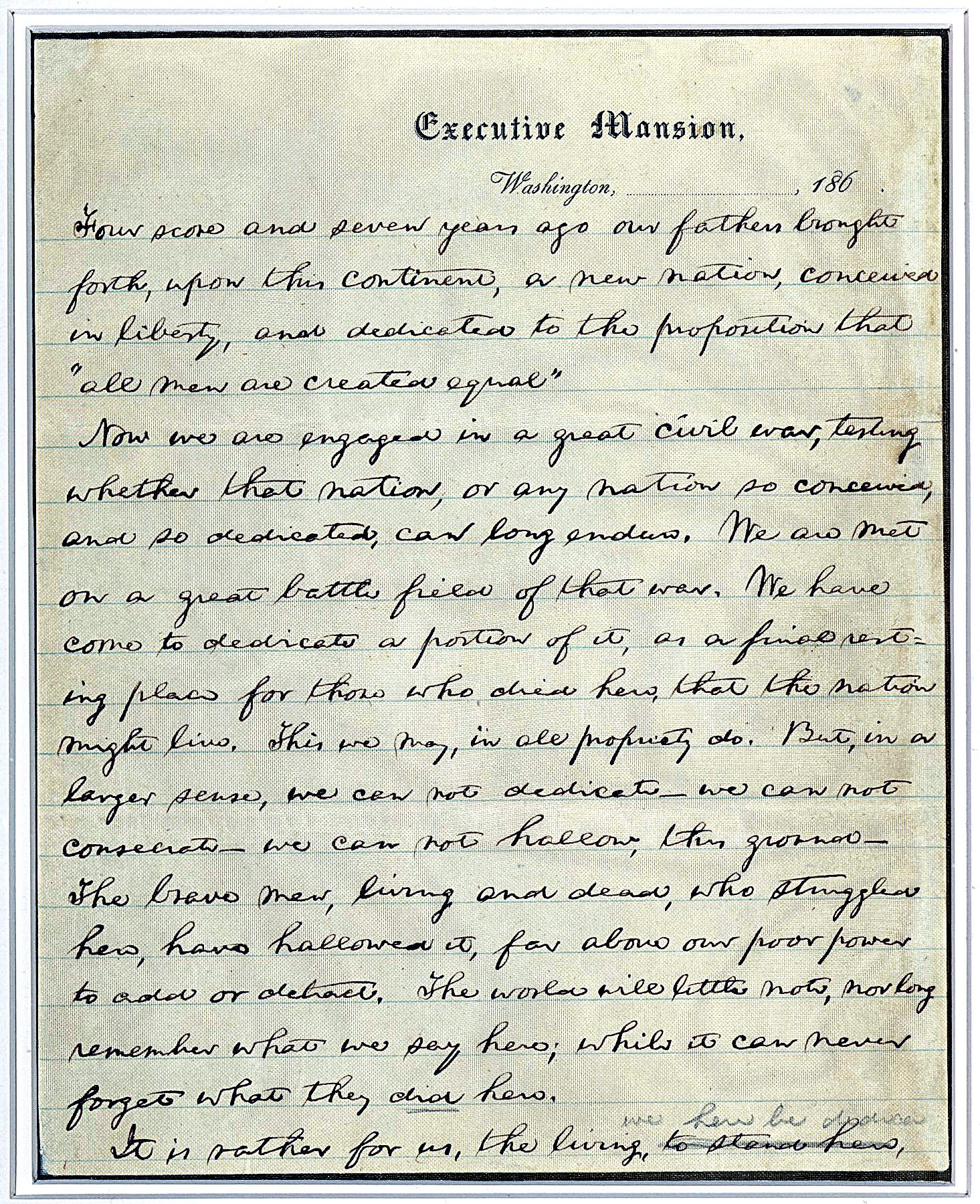
Page one of the earliest draft, on Executive Mansion stationery, in ink, written in Washington before he ever boarded the train. So much for the envelope on the way to Gettysburg.
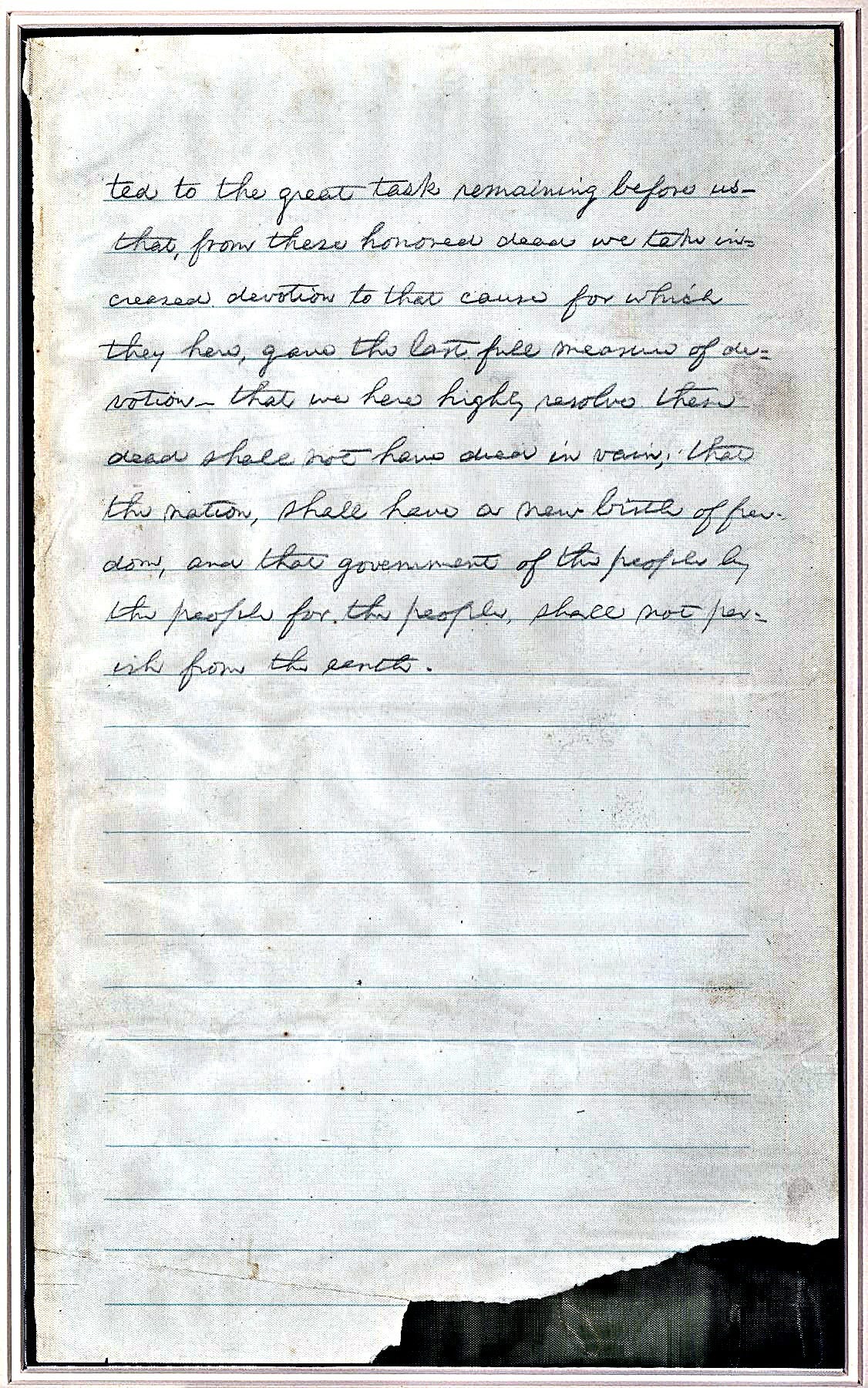
Page two. There are five drafts in Lincoln’s hand. The speech is spare because he cut and cut, not because it fell out of the sky. A man who thought the country itself was unfinished work was not about to leave his own sentences unfinished either.
The men who wrote “all men are created equal” did not live up to it. Neither, fully, have we. Lincoln’s answer was not to lower the bar but to keep the country dedicated to reaching it. Two hundred and fifty years on, that may be the most useful idea the founding ever produced.
Cameron Cross
Sources: Lincoln portrait by Alexander Gardner, November 1863, Library of Congress. The Gettysburg Address in Lincoln’s hand (Nicolay copy), Library of Congress. Declaration of Independence, U.S. National Archives. All public domain.
Thank you for posting this, Cam. I’m glad that you pointed out that Lincoln wrote this in Washington, not dashed it off on the back of an envelope on a train! These are words worth remembering.
I recommend the trilogy by Akhil Reed Amar, the first two of which are published: The Words That Made US, and Born Equal—Remaking America’s Constitution. Brilliant! I’m looking forward to the third volume yet to be published. Also, if you get a chance to hear him talk, don’t pass it up.