

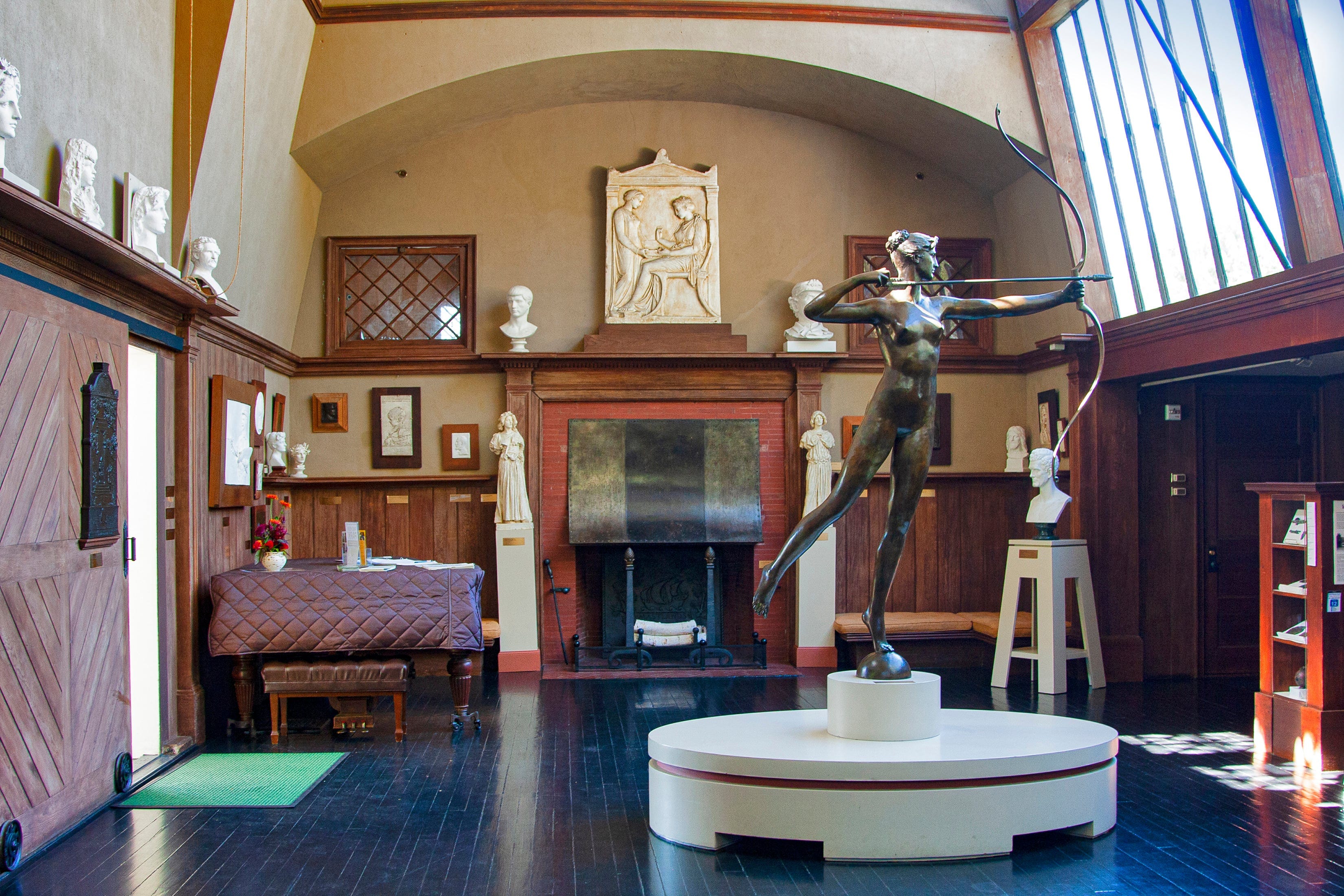
Jigsaw for May 3, 2026: St.-Gauden’s Little Studio
After my Maxfield Parrish post, I wanted to turn to his friend and Cornish Colony inspiration, Augustus St.-Gaudens.
I have visited his home Aspet many times. Like many of Parrish’s works, it always seems like a place with its own reality.
I first chose one of his famous works as the puzzle subject. Then I found the photo of his studio, which works perfectly for a jigsaw puzzle: striking individual pieces that combine to become a work of art in itself. No expanses of sky, vegetation, or background.
In 1885, Saint-Gaudens first rented what had been the Blow-Me-Down Farm. Seven years later he purchased the property, naming it after his father’s birthplace in France. Over the next 15 years, he transformed it into a thriving estate with gardens, a swimming pool, bowling green, and studio spaces where he created major works. He even developed a 9-hole, "cow-pasture" style golf course.
His year-round residence began in 1900.
Augustus Saint-Gaudens died in 1907, just after finishing the designs for the $20 Saint-Gaudens Gold Double Eagle coin. His widow, Augusta (!) Saint-Gaudens, established the Saint-Gaudens Memorial to maintain the site. It opened to the public in 1926.
Discover more: Interactive Map of Saint-Gaudens’ work
and Visitors' Photos, a sampling from TripAdvisor


Thanks for reading…
Cameron Cross
Yes, but from my reading, Charles Beaman called it "Blow-Me-Up" but to others in Town it was called "Huggins' Folly". My theory, and this is just a theory, that the house was so horrifying (St. Gaudens when taking the first look at the house described it as "....it appeared so forbidding and relentless that one night have imagined a skeleton half-hanging out of the window, shrieking and dangling inthe gale, with the sound of clanking bones.") that Beaman was referring to it with tongue in cheek and calling it "Blow-Me-Up"! In A Brief History of Cornish by Hugh Wade Mason, he writes, "It was not until 1891 that Beaman agreed to sell "Blow-Me-Up"' as he called it, for $2500 and a bas-relief portrait of himself." (pg. 49) So, with all that said, yes, Blow-Me-Up did become named Aspet.
I think you mean "Blow-Me-Down Mill" when you refer to a Grange which was a gristmill which local farmers could utilize and was across the street from his house named "Blow-Me-Down". He sold what he called, "Blow-Me-Up", the house known as "Huggins' Folly" to St. Gaudens in 1891.