

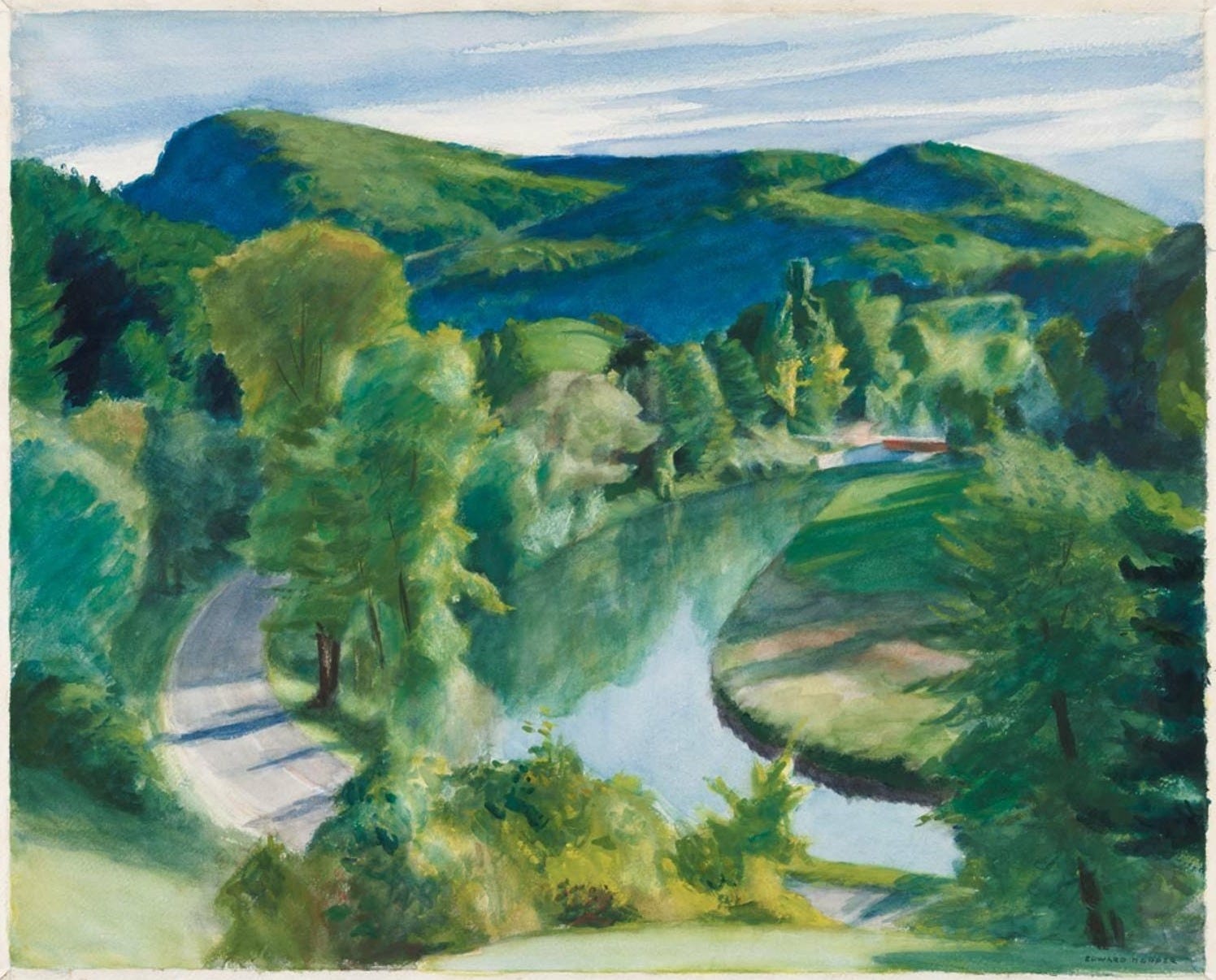
“Edward Hopper, “First Branch of the White River, Vermont
1938, Museum of Fine Arts, Boston
Jigsaw for August 1: https://puzzles.curioustorian.com/hopper-first-branch
You already know an Edward Hopper painting, even if you have never heard his name. A diner at two in the morning. Green walls, a curved window, three customers and a counterman who are all somehow alone together. That is “Nighthawks,” and it is about as famous as an American picture gets.
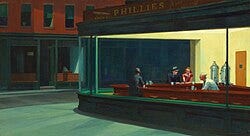
“Nighthawks,” 1942. Art Institute of Chicago. Shown here for contrast.
So here is the surprise. The man who painted the loneliest corner in America came north to Vermont across five summers between 1927 and 1938, and in the last two of them he painted a quiet bend of the White River, on a farm about twenty minutes up Route 14 from here.
Hopper first came north in 1927. He and his wife Jo had just sold a painting for the most money he had ever gotten, fifteen hundred dollars, and they spent it on a used car. That car turned them loose on New England. They crossed the Cheshire Bridge from Charlestown into Springfield, wandered the back roads, and Hopper decided that the valleys of the White River were, in his own words, “perhaps the finest in Vermont.”
In 1937 and 1938 the Hoppers boarded on the Slaters’ place, Wagon Wheels Farm, on Route 110 just outside South Royalton. Robert and Irene Slater took in paying guests to get through the Depression, and the famous painter from New York turned out to be an easy boarder. He helped with chores, though by all accounts he was hopeless at milking. When he set up to paint, the cows came to watch. Jo named one of them Susie, “the long lashed luscious chorus beauty of a calf.”
The picture he made there is the one in this week’s puzzle: “First Branch of the White River,” painted in the autumn of 1938. The Museum of Fine Arts in Boston bought it the next year, and when the curator wrote to ask how it came about, Hopper wrote back that he had sat “in a steep mountain pasture of Slater’s looking down on this stream, so very steep a hill that I had to prop up the front legs of my stool to keep from sliding down.”
He went to that trouble on purpose. Look closely and Hopper is quoting a much older painting. A hundred years before him, Thomas Cole had climbed Mount Holyoke to paint “The Oxbow,” the great loop of the Connecticut River, and founded a whole American way of seeing landscape from a high, precarious perch. Hopper knew it cold, and his sinuous curve of the White River is his own small, quiet answer to Cole’s grand one.
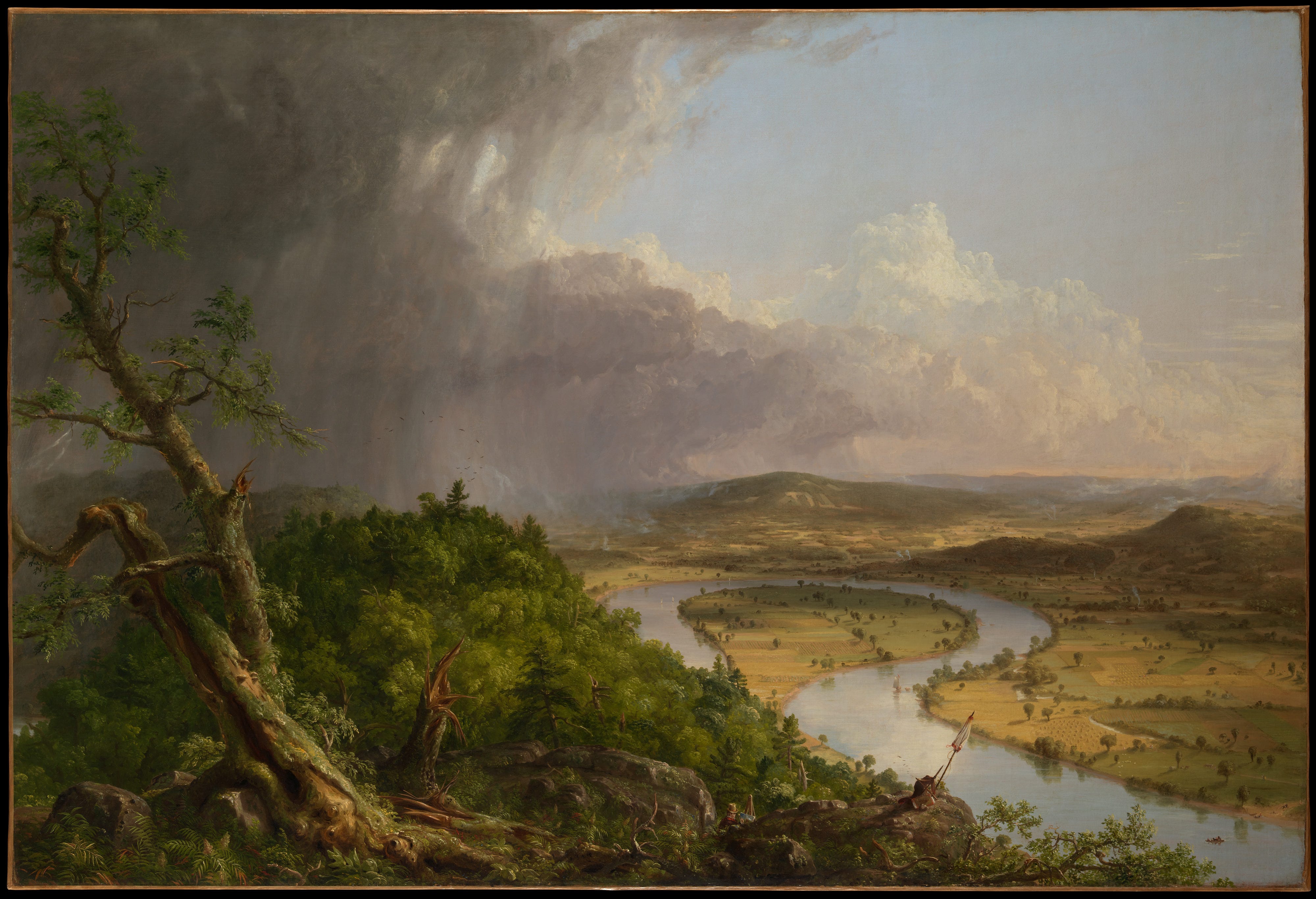
Thomas Cole, View from Mount Holyoke … The Oxbow
1836. The Metropolitan Museum of Art.
That is the thread this whole series keeps pulling. The Hudson River School painters came north into Vermont and New Hampshire looking for views like this one long before Hopper did.
If you want to stand where he stood, the bend is still there on Route 110, just south of the old Slater farmhouse (here on the map). Fair warning, though. The steep pasture Hopper nearly slid down is grown over now, thick with brush and trees. The exact view he risked his neck for has quietly closed itself off. You can find the river. You cannot quite find the painting.
The book. Almost everything above I owe to one remarkable piece of detective work: Edward Hopper in Vermont, by Bonnie Tocher Clause, who lives part of the year in Royalton and spent years tracking down the precise spots Hopper painted, right down to the ones she drove past on her way to the post office. If this post interests you at all, her book will reward you tenfold. Track down a copy here. It went out of print when its publisher closed, so grab one while you still can.
More Upper Valley art history
Three earlier Curioustorian posts on the artists who worked these hills, each with a jigsaw of its own:
This week’s jigsaw: https://puzzles.curioustorian.com/hopper-first-branch
For the zoomers among you: zoom into Hopper’s First Branch of the White River at the MFA and Cole’s Oxbow at the Met at full resolution.
Thanks for your support, as always,
Cameron Cross
Sources: Painting, First Branch of the White River, Vermont, 1938, Museum of Fine Arts, Boston (public domain). Thomas Cole, The Oxbow, 1836, The Metropolitan Museum of Art (public domain). Nighthawks, 1942, Art Institute of Chicago, shown for commentary. Research, Bonnie Tocher Clause, Edward Hopper in Vermont (University Press of New England, 2012).