

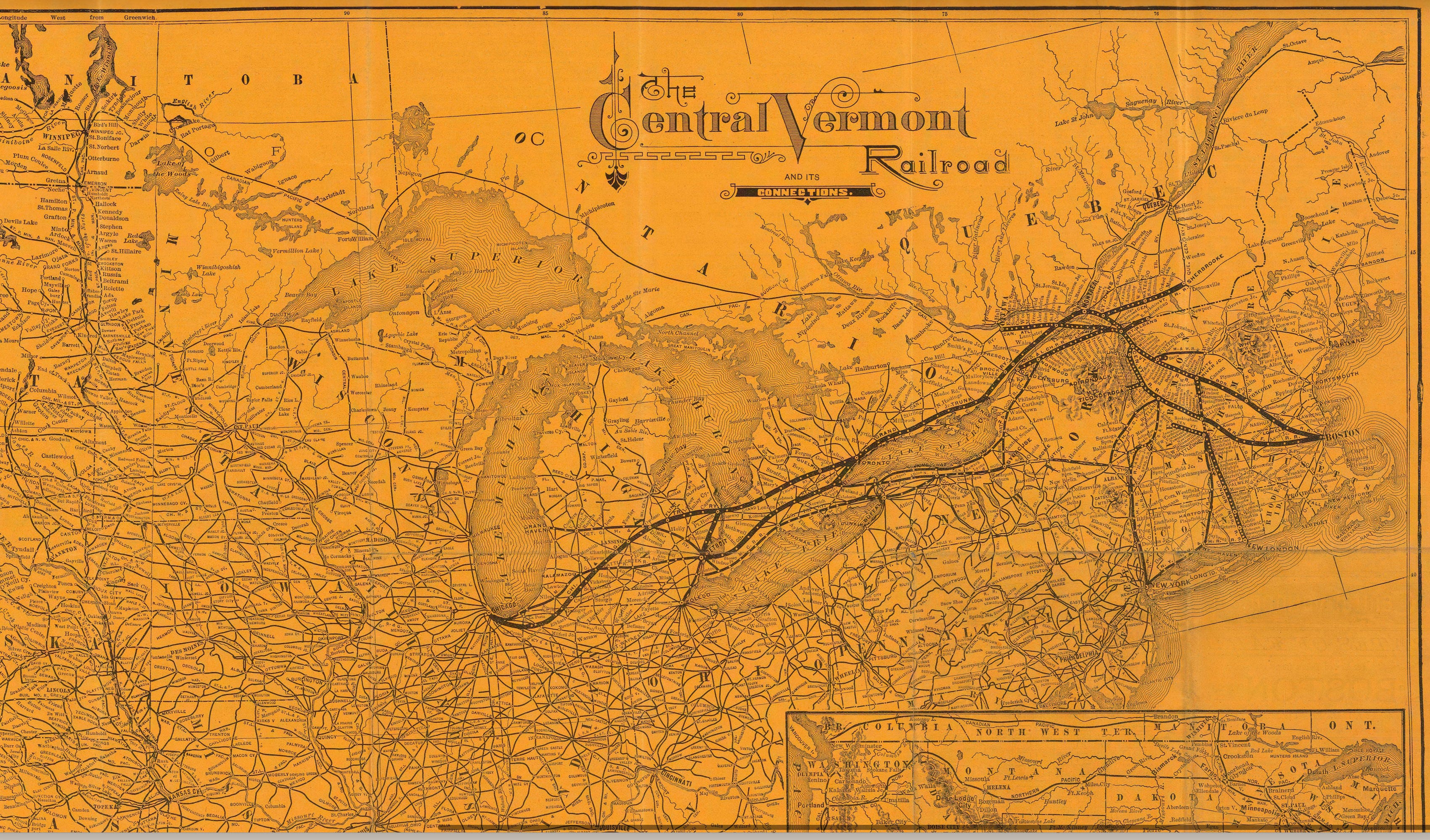
Jigsaw for March 1, 2026: Central Vermont Railroads, 1877
On July 17, 1854 Hartford’s Joseph and Forrest Savage and their two Hazen cousins stood at the Boston depot with instruments in hand.
As the train pulled away from Boston, the crowd sang a poem composed by John Greenleaf Whittier. It was set to the familiar tune of “Auld Lang Syne.” It became the theme song of the movement, and the brothers played it at train stations and on steamships during their journey west.
They traveled first by rail to Buffalo, then across Lake Erie aboard the steamer Plymouth Rock.
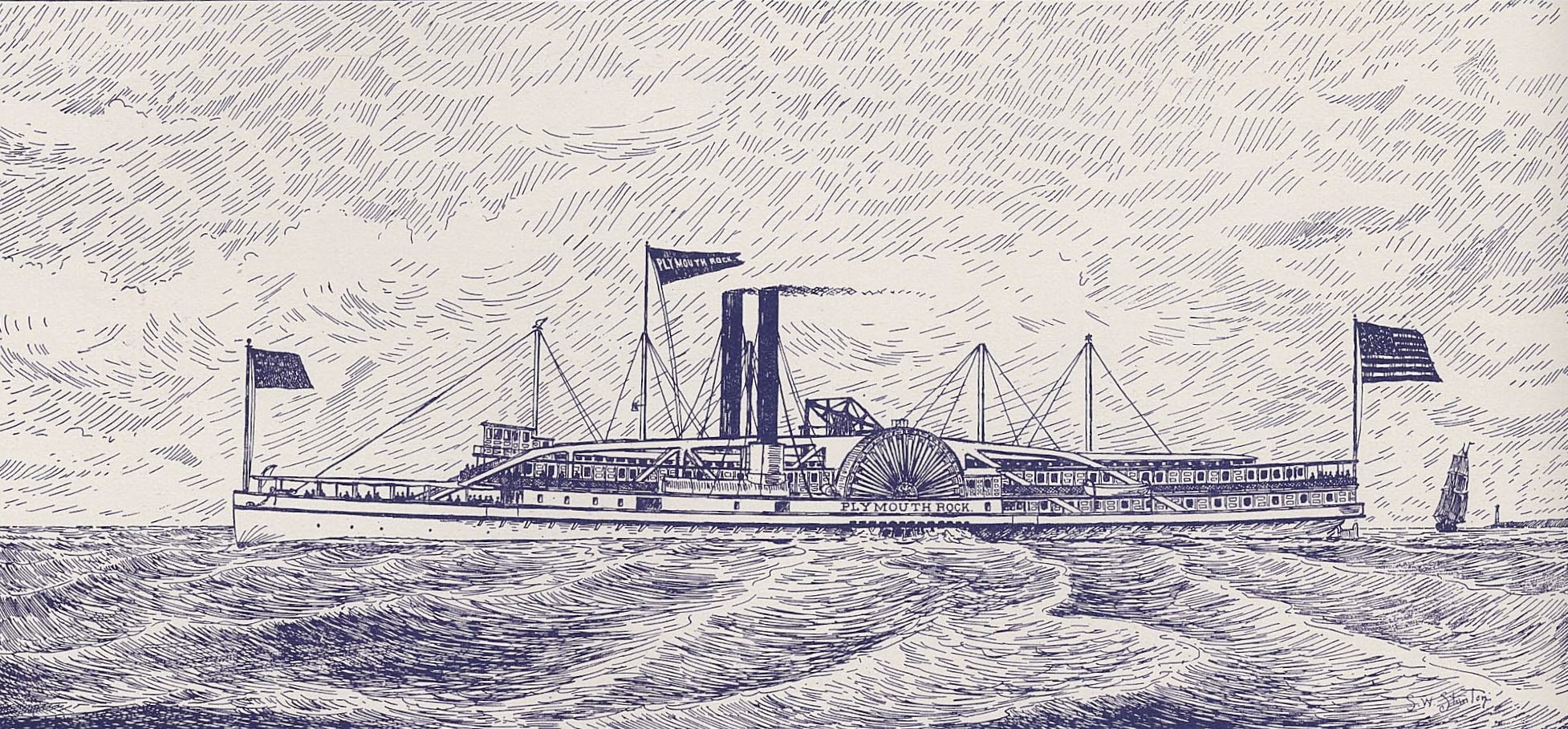
From Detroit, the men rode west by rail again before boarding a similar river steamer, the Polar Star, in St. Louis.
A contemporary account notes:
“We had four Potawatomies going to the Kickapoo Indians, from Milwaukee. We have six slaves with their masters going to work hemp in Lexington, Missouri. Some of them appear happy in their midnight ignorance. The master of one said he paid $1,400 for him. One poor fellow has left a wife and five children in Kentucky, but his master was compelled to sell him to save himself from ruin. We had many slave-owners on board, some of whom talked loud about tar and feathers on our arrival.”
The paddlewheels churned down the Mississippi and up the Missouri rivers toward Kansas City. They arrived July 28, 1854.
From there, the musicians loaded their horns, supplies, and gear for a 40-mile, overland trek to the Wakarusa River. At the Kansas border, they paused again for a rendition of Whittier’s poem. When the made camp in Lawrence, those same instruments joined with other musicians as part of the first band in Kansas
Twenty-five years later, at an Old Settlers’ reunion, Forrest Savage was in the band to play the song again.
Cameron Cross
For a detailed accounts of the Emigrant Society and the First Kansas band, see:
https://www.kancoll.org/khq/1943/43_2_barry.htm
https://www.kancoll.org/khq/1936/36_3_bumgardner.htm
Since I am a history buff, I love the photos and comments that you write. Every day I'm learning more about Norwich and the Upper Valley particularly as I have also lived in Norwich (pronounced Norich) England and it is quite different.
Pat
I had an old dairy farmer tell me once that Vermont lost almost half its population when the railroad came; including some of his own family, as relayed by his great grandfather.